
Rise to power: revolt and accession
Richard joined his brothers’ 1173–1174 revolt against Henry II, supported by their mother Eleanor and Louis VII of France.
The rebellion failed; Henry II defeated the opposition and Richard submitted in 1174, demonstrating the limits of his early power.
Family conflict continued, centred on control of the extensive Angevin territories in France.
In 1189, Richard allied with Philip II of France against Henry II; Henry died that year and Richard succeeded as king.
For Paper 1, connect Richard’s rise to dynastic conflict, French alliances and military experience, not simply hereditary succession.
Motives, objectives and success
Objective | Richard’s actions | Extent of success |
|---|---|---|
Defend and recover French lands | Returned after captivity and campaigned repeatedly against Philip II. | By 1199, Richard had recovered the lands lost during his absence: strong short-term success. |
Defend the crusader states | Helped secure Acre, defeated Saladin at Arsuf, fortified Jaffa and protected the coast. | Significant military success that strengthened the surviving crusader position. |
Recover lost Holy Land territory | Advanced towards Jerusalem and negotiated with Saladin. | Partial success: Jerusalem was not reconquered, but the Treaty of Jaffa preserved coastal gains and access for pilgrims. |
Sicily and Cyprus, 1190–1191
Richard reached Sicily in 1190, where disputes with King Tancred involved Richard’s sister Joan and her financial claims.
After clashes in Messina, Richard captured the city on 4 October 1190 and forced negotiations with Tancred.
Sailing east in 1191, storms scattered Richard’s fleet and some ships were wrecked on Cyprus.
After conflict with the island’s ruler Isaac Komnenos, Richard rapidly conquered Cyprus.
Cyprus provided a valuable strategic and logistical base close to the crusader states.
Exam use: Sicily shows force plus diplomacy; Cyprus shows Richard’s speed, opportunism and military effectiveness.
Crusade outcomes and the Acre prisoners
Richard’s campaigns restored significant coastal territory, but he failed to recover Jerusalem, making the Crusade a qualified rather than complete success.
His victories at Arsuf and Jaffa demonstrated disciplined battlefield leadership against Saladin.
After Acre surrendered, negotiations concerned ransom, prisoners and restoration of the True Cross.
When agreed terms were delayed, Richard ordered the killing of around 2,700 Muslim captives on 20 August 1191.
The episode is crucial when evaluating Richard’s chivalric reputation against the realities and brutality of medieval warfare.
Exam use: balance evidence of military prowess with evidence challenging an idealized reputation.
Captivity and campaigns in France
Returning from the Crusade, Richard was captured by Leopold V of Austria and transferred to Emperor Henry VI in early 1193.
His captivity gave Philip II opportunities to attack Richard’s French possessions while John challenged his authority in England.
Richard was released in 1194 after arrangements for a ransom of 150,000 marks of silver.
He then concentrated heavily on warfare in France against Philip II.
Richard recovered the territories lost during his absence by 1199, demonstrating considerable military effectiveness.
He died in 1199 while conducting a siege at Châlus in France.
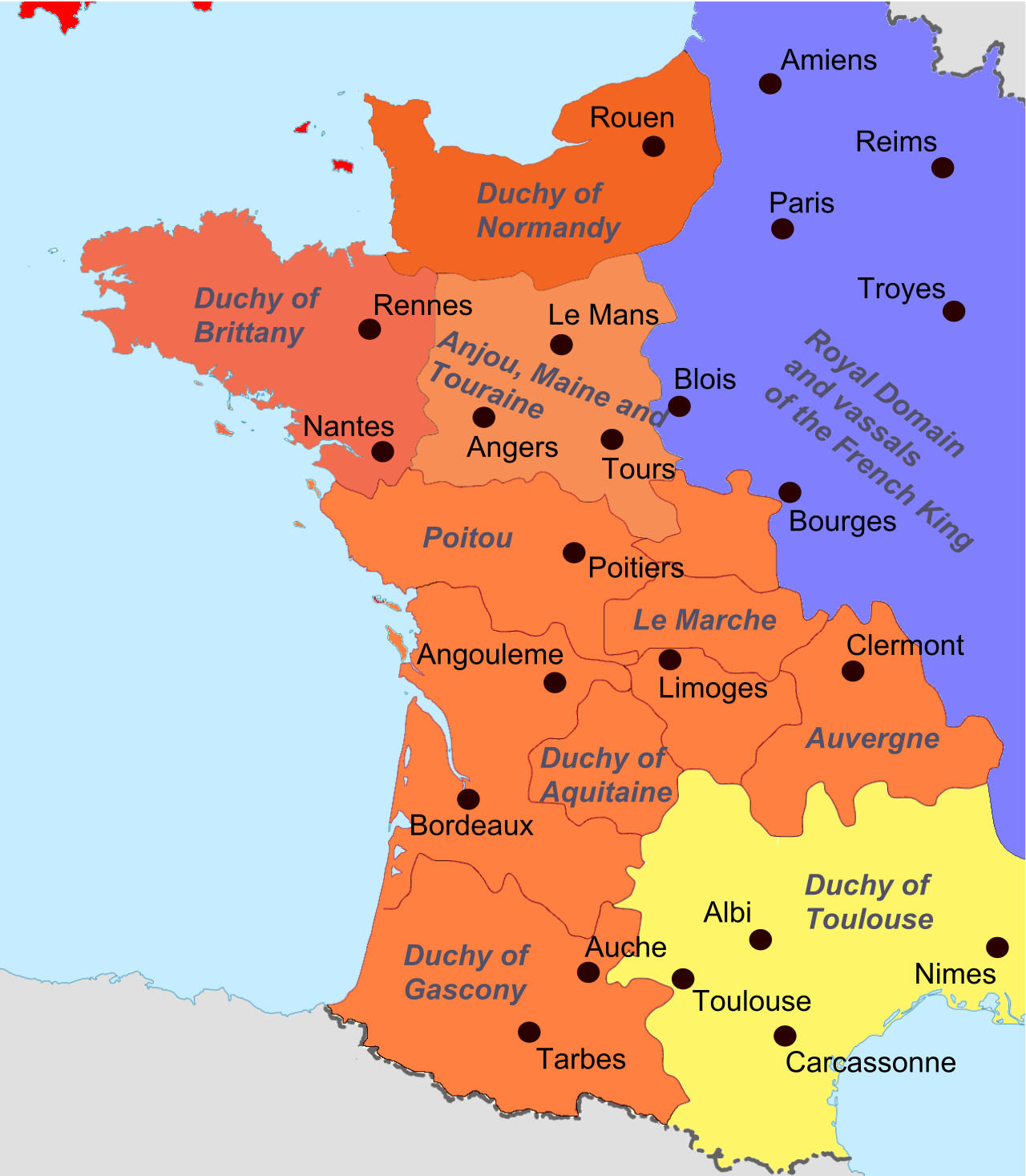
The map demonstrates why defending French lands was central to Richard’s kingship: most of the Angevin territorial complex lay across the Channel. Source
Checklist: can you do this?
Can you explain why Richard joined the 1173–1174 revolt and how he eventually became king?
Can you evaluate Richard’s reputation for military prowess and chivalry using both supporting and challenging evidence?
Can you distinguish Richard’s French objectives from his objectives in the crusader states?
Can you explain the significance of Sicily, Cyprus, Acre, Arsuf and Jaffa?
Can you assess how successfully Richard achieved his military objectives by 1199?
Can you explain how Richard’s absence affected England and France?
Can you explain how campaigns and ransom affected royal finances and taxation?
Can you use anti-Jewish violence and the Acre prisoners when evaluating Richard’s wider social and religious impact?
Reputation, military prowess and chivalry
Richard became famous as “Richard the Lionheart”, with his reputation centred on courage, battlefield leadership and crusading warfare.
Victories at Acre, Arsuf and Jaffa strengthened his image as one of the leading warrior-kings of medieval Europe.
His reputation for chivalry reflected the aristocratic ideals of martial courage, honour and Christian kingship associated with crusading.
However, his execution of Muslim prisoners after Acre complicates any purely heroic interpretation of his reputation.
In source questions, distinguish contemporary reputation from evidence about Richard’s actual conduct.
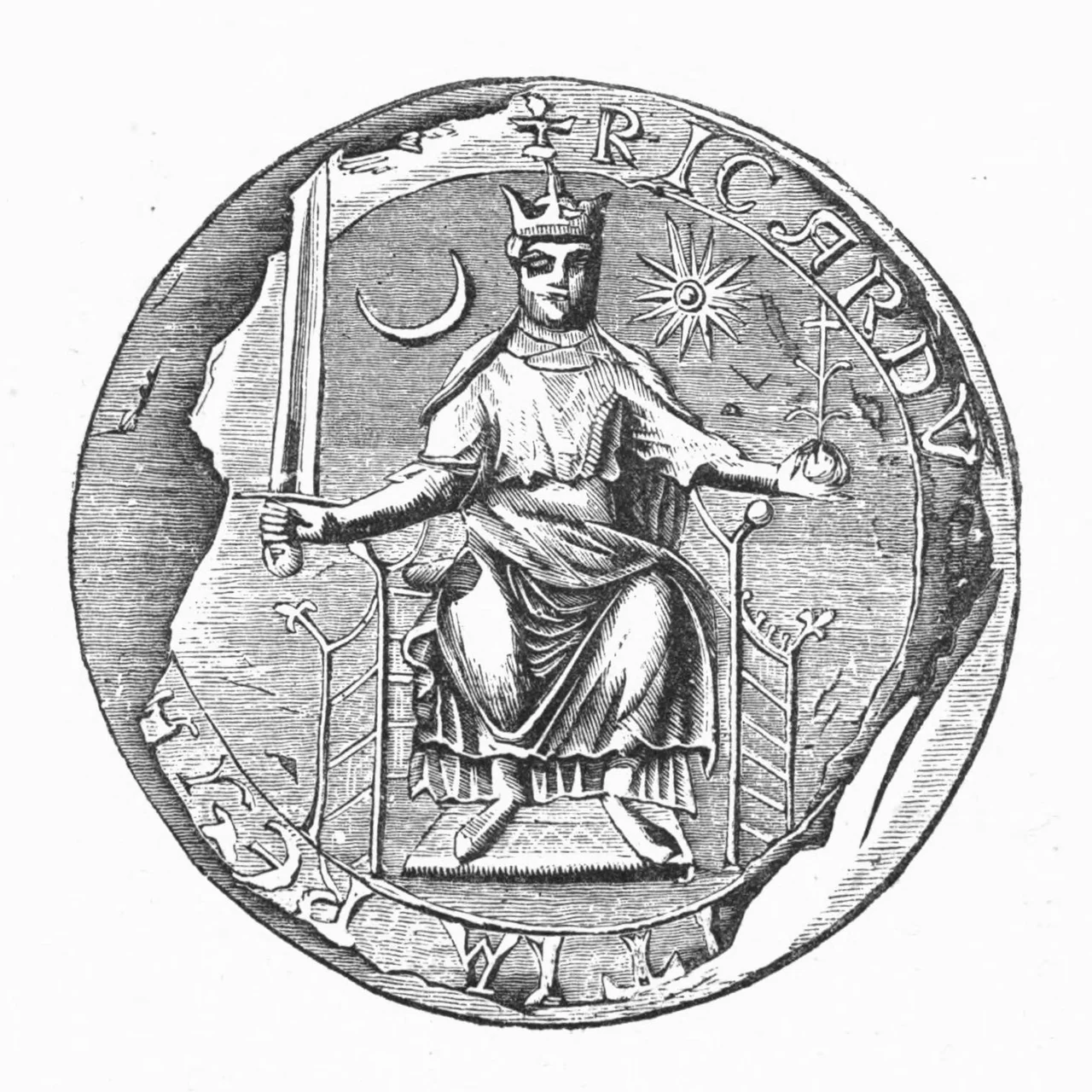
Richard’s Great Seal presents him simultaneously as a monarch and warrior, useful visual evidence for his royal and military image. Source
The Third Crusade, 1191–1192
Richard reached the Holy Land in 1191 and contributed decisively to the capture of Acre.
At Arsuf, 7 September 1191, his army resisted Saladin’s attacks and won control of the battlefield.
Richard then secured and fortified Jaffa, creating a coastal base for further operations towards Jerusalem.
He approached Jerusalem but did not attempt a final capture, partly because maintaining control afterwards would have been difficult.
The Treaty of Jaffa (1192) ended Richard’s campaign and preserved important crusader coastal positions.
Exam use: distinguish tactical victories from failure to achieve the larger objective of recovering Jerusalem.
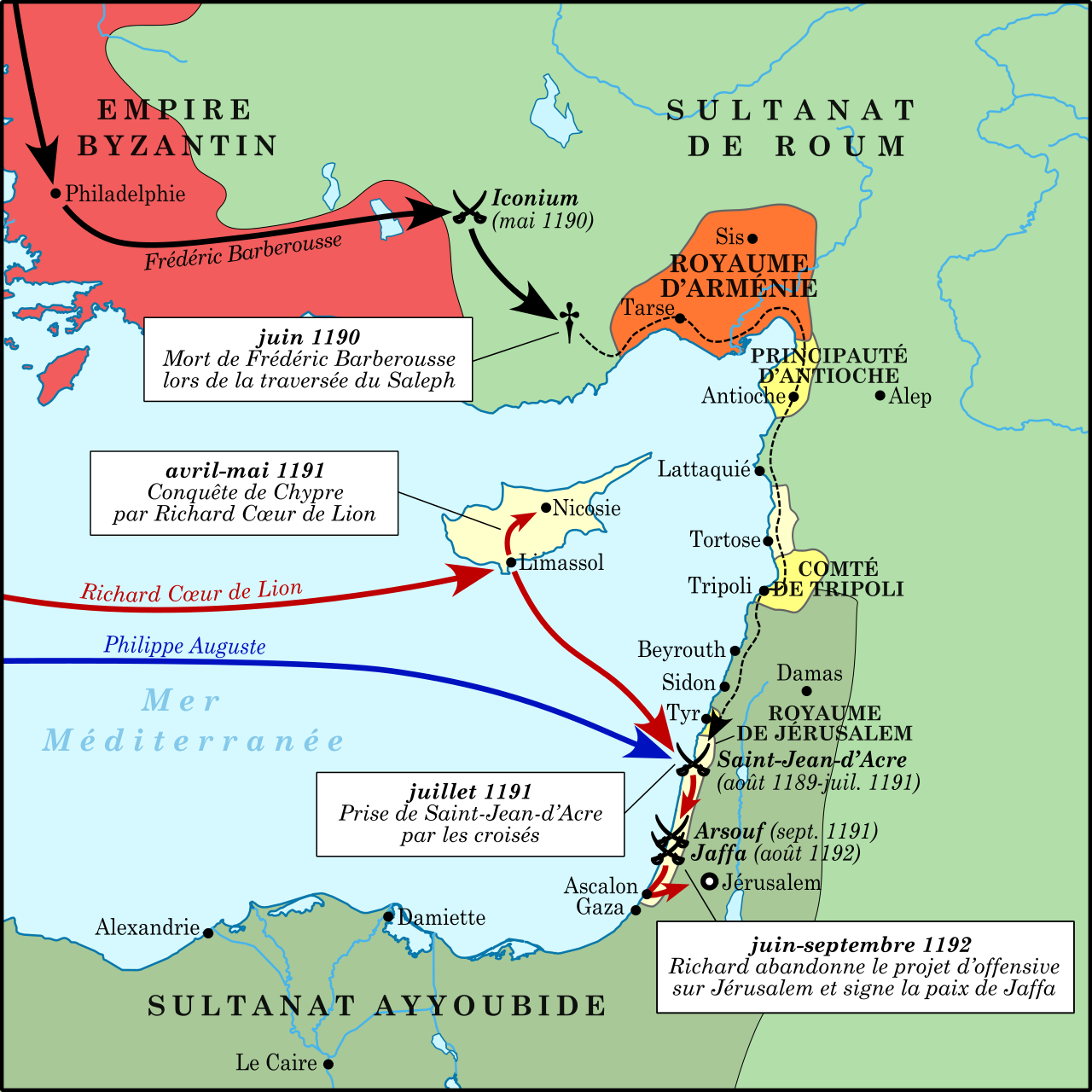
The map places Richard’s campaign within the wider Third Crusade and shows the strategic importance of Mediterranean routes and the eastern crusader states. Source
Political impact in England and France
Richard spent long periods outside England because of the Crusade, captivity and warfare in France, leaving government to appointed officials.
His absence contributed to political instability, especially when John attempted to strengthen his own position.
John occupied Windsor Castle and supported armed opposition while Richard remained captive.
At the same time, Philip II attempted to acquire Richard’s French territories through invasion and negotiation.
Richard’s return checked Philip and recovered lost lands by 1199, limiting immediate Capetian gains.
For evaluation, contrast this short-term recovery with the syllabus theme of growing Capetian prestige, strength and royal control.
Economic, social and religious impact
Richard needed exceptional revenue for the Crusade, continental wars and ransom, placing major financial demands on his territories.
He raised crusading funds by selling offices and privileges and received 10,000 marks from William I of Scotland in return for ending feudal obligations.
His 150,000-mark ransom required heavy contributions from England, including the clergy.
Anti-Jewish violence followed Richard’s 1189 coronation, with attacks later spreading to several towns and culminating at York in 1190.
A false rumour claimed Richard had ordered the killings; evidence indicates he had not.
Link these impacts to the wider pressures created by crusading warfare and royal finance.