
Culture is the shared system of beliefs, values, customs, behaviors, symbols, and artifacts that define the way of life for a group of people and are passed down through generations.
What Is Culture?
Culture encompasses everything that makes a society unique—from the language people speak to the clothes they wear, the foods they eat, the customs they follow, and the values they uphold. It is a powerful force that shapes individual identity, community belonging, and national pride. Culture is learned, not inherited, and it is constantly evolving as people interact with each other and with their environment. In human geography, understanding culture helps geographers examine spatial patterns, human behavior, and global interconnectedness.
Cultural Traits, Complexes, and Systems
A cultural trait is a single, identifiable element of culture. These are the smallest units of culture and include things like wearing a hijab, using chopsticks, or speaking a specific dialect.
A culture complex is a group of related cultural traits that are centered around one feature of life. For example, a wedding ceremony includes rituals, clothing, music, and food—all of which together form a cultural complex.
A culture system is formed when different culture complexes combine and are shared by a group of people, forming a larger system that shapes the identity and norms of a society.
These layers—traits, complexes, and systems—allow geographers to categorize and analyze the development of cultural identities and how they are expressed across space.
Habits, Customs, and Social Practices
Culture includes behaviors and actions that are either individual or communal. Distinguishing between habits and customs is essential.
A habit is a repeated behavior that an individual performs regularly. Examples include brushing one’s teeth, reading before bed, or drinking coffee every morning.
A custom is a practice routinely followed by a group of people. Customs are passed down and socially reinforced, such as shaking hands when greeting or celebrating national holidays.
Habits are typically personal and vary from person to person, whereas customs are shared practices that help maintain social order and unity within a group. Customs reflect deeper cultural values and often carry symbolic meaning.
Folk Culture vs. Popular Culture
Folk culture is practiced by small, homogeneous groups often living in isolated rural areas. It is deeply rooted in tradition, passed down orally or through demonstration, and changes very slowly over time. Its diffusion typically occurs through relocation diffusion, where people physically move and bring their culture with them.
Example: The Amish in the United States who live without modern technology and adhere to centuries-old religious customs.
Popular culture, by contrast, originates in large, heterogeneous societies, typically in urban and economically developed regions. It is influenced by mass media, consumerism, and global networks. It spreads rapidly through hierarchical diffusion (from influential people or nodes) and contagious diffusion (widespread and uniform).
Example: Global music trends, such as pop music or viral dances, which spread quickly via platforms like TikTok or YouTube.
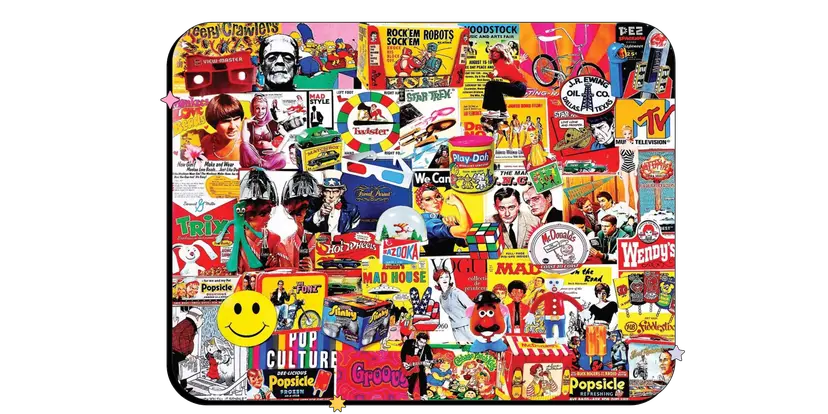
Folk culture is deeply tied to place and tends to resist change, while popular culture is often placeless, spreading quickly and constantly evolving.
Material vs. Non-Material Culture
Culture can be divided into two main components: material and non-material culture.
Material Culture
Material culture includes all the physical objects created and used by members of a society. These objects reflect the technology, aesthetic values, and economic activities of the group.
Examples include clothing, tools, buildings, artwork, vehicles, and food.
These artifacts give insight into a society’s technological level, geographic conditions, and social organization.
Material culture is visible, touchable, and measurable, making it easier for geographers to observe.
Non-Material Culture
Non-material culture refers to the intangible elements of culture that influence behavior and perception.
Mentifacts: These are ideas, beliefs, language, religion, philosophies, and worldviews that influence how people think and understand the world.
Sociofacts: These are social structures and institutions such as family systems, political ideologies, educational structures, and legal systems.
Non-material culture plays a crucial role in guiding behavior and maintaining social cohesion. It cannot be physically touched but is embedded in social interactions and cultural expressions.
Cultural Hearths
A cultural hearth is a geographical area where cultural practices, innovations, and ideologies originate. These regions are the sources from which cultural traits spread outward.
Major Cultural Hearths in History
Mesopotamia (modern-day Iraq): Origin of the earliest writing systems, agriculture, and organized religion.
Nile River Valley (Egypt): Known for monumental architecture, centralized government, and advancements in science and mathematics.
Indus River Valley (Pakistan and northwest India): Early urban planning, sanitation, and trade networks.
Huang He Valley (China): Source of Confucianism, Taoism, and dynastic rule.
Mesoamerica (Mexico and Central America): Known for complex societies like the Maya and Aztecs, advances in astronomy, and maize cultivation.
These hearths represent the original centers of cultural development and innovation. As people migrated or traded, these cultural ideas diffused into other regions, shaping global civilizations.
Folk Customs and Environmental Interaction
Folk customs are often deeply embedded in the local environment. Environmental factors—such as climate, terrain, and natural resources—play a key role in shaping traditional practices.

Photo of Tiananmen Square Massacre, 1989
Folk customs often arise from necessity, such as adapting housing materials to the local ecosystem or selecting foods that are seasonally available.
Because folk groups are typically isolated, their customs evolve independently, resulting in wide cultural variation even across relatively short distances.
Over time, these customs become strongly linked to identity and are resistant to change, helping communities maintain cultural continuity.
Example: Traditional stilt houses in Southeast Asia help residents adapt to monsoon flooding.
Food and Cultural Values
Food is both a physical necessity and a profound symbol of cultural identity. What people eat, how they prepare it, and when they consume it is deeply embedded in tradition.
Folk Food Traditions
Based on available resources and environmental conditions.
Strongly influenced by religious and cultural taboos.
Example: In Hindu culture, beef is avoided; in Islamic and Jewish cultures, pork is prohibited.
Food may also reflect social status and group belonging.
Pop Culture and Food Trends
In popular culture, food consumption is heavily influenced by mass media, convenience, and advertising.
Fast food and processed items dominate urban diets, often leading to standardized diets across the world.
Wealthier individuals may consume specialty foods such as organic produce or imported wine, signaling social status.
Housing and Cultural Landscapes
Housing reveals much about a society’s values, technology, and interaction with the environment.
Folk Housing Styles
Built using local materials such as mud, wood, stone, or thatch.
Reflect both environmental needs and cultural symbolism.
Designs are often passed down through generations, maintaining architectural heritage.
Example: Yurts used by nomadic groups in Central Asia are portable and suited to harsh climates.
Popular Housing Styles
Influenced by global architectural trends and industrial production.
Standardized designs lead to uniform landscapes, reducing regional uniqueness.
In many modern cities, housing is shaped more by economic forces than environmental or cultural considerations.
Popular Culture and Globalization
Popular culture is closely tied to the process of globalization—the interconnectedness of people, economies, and ideas on a global scale.
Technology, transportation, and communication allow popular trends to spread rapidly across vast distances.
Music, fashion, film, and language trends are adopted by people around the world, sometimes at the expense of local traditions.
Blue jeans, smartphones, and global franchises like McDonald's are examples of popular culture with global reach.
This widespread adoption can lead to cultural homogenization, where regional differences are minimized.
Media, Technology, and Cultural Diffusion
The internet, social media, and mass communication technologies have revolutionized cultural diffusion:
Platforms like TikTok, Instagram, and Spotify allow instant sharing of music, memes, and fashion trends.
Viral content can cross borders within hours, leading to near-instantaneous global trends.
Mass media also allows marginalized voices and subcultures to gain visibility and influence.
Unlike earlier forms of diffusion that were slow and regionally limited, digital diffusion is rapid and borderless.
Political Influence on Culture
Governments play a role in shaping, promoting, or restricting culture:
Censorship is used in many countries to prevent cultural or political dissent. Governments may restrict foreign media or regulate internet access.
Example: The Chinese government’s internet firewalls and control over foreign media.
Protests and Cultural Movements: Events like the Tiananmen Square protests (1989) and the Arab Spring (2011) were sparked by cultural and political grievances, but heavily shaped by government responses, including suppression and media control.
Some governments promote national culture and resist foreign influence to maintain political stability or ideological purity.
Sustainability and Cultural Impact
The spread of popular culture brings significant sustainability concerns:
Environmental degradation from mass production, overconsumption, and pollution.
Animal endangerment due to fashion trends, such as ivory accessories or fur clothing.
Waste production from fast fashion and disposable electronics creates major sustainability challenges.
Uniform landscapes develop as chain stores and housing developments replace regional character.
These impacts highlight the importance of balancing cultural expansion with environmental and social responsibility.
Ethnocentrism and Cultural Relativism
How we interpret other cultures shapes interactions and understanding.
Ethnocentrism is the belief that one's own culture is superior, leading to misjudgment or hostility toward others.
Cultural relativism encourages an objective view, understanding cultures on their own terms without bias.
Cultural relativism is essential in human geography as it allows for respectful and informed study of diverse cultures. It supports empathy, reduces prejudice, and promotes global understanding.
Resistance to Popular Culture
Despite its global influence, popular culture is not universally embraced.
Cultural preservation movements strive to protect indigenous languages, traditions, and crafts.
Nationalist ideologies resist foreign cultural influence, often promoting traditional dress, media, and customs.
Minority communities may seek autonomy and protection of their cultural identity against the encroachment of dominant popular trends.
FAQ
Geographers study culture to understand how human behavior varies across space and influences landscapes. Culture shapes settlement patterns, land use, architecture, and economic activity. For example:
Language and religion determine place names and sacred spaces.
Customs and traditions influence urban layouts and neighborhood structures.
Cultural identity affects migration patterns and regional clustering.
Material culture like clothing, tools, and housing leaves physical traces on the landscape.
By examining these spatial expressions of culture, geographers can map how cultural regions form, change, and interact, offering insight into broader social, political, and economic processes.
Language is a central component of culture as it transmits beliefs, knowledge, and values. It defines group identity, connects generations, and reinforces social norms. In cultural geography, language is classified as a mentifact, meaning it represents intangible ideas and beliefs. Its significance includes:
Defining cultural boundaries: Languages often correspond with ethnic or national identity.
Facilitating diffusion: Language allows the transmission of religious texts, folklore, and laws.
Creating language families and branches: Linguists study how languages evolve and diverge over time.
Impacting place: Bilingual signage or regional dialects illustrate linguistic diversity in the landscape.
Language both reflects and maintains cultural cohesion within and across communities.
Cultural identity often drives resistance to popular culture when local groups seek to protect their traditions, autonomy, or values. Resistance is rooted in:
Fear of cultural erosion: Communities may worry about losing language, customs, and religious practices.
Political autonomy: Indigenous or minority groups may reject foreign cultural symbols imposed by dominant cultures.
Economic exclusion: Popular culture is often consumer-driven and may marginalize groups with limited access to global markets.
Nationalism: Governments may promote traditional dress, music, or language to reinforce national identity.
This resistance can lead to policies that limit foreign media or promote cultural preservation through education and local arts.
Traditional gender roles, shaped by cultural beliefs and historical norms, deeply influence daily practices, family structures, and division of labor. Cultural geographers study gender roles by observing:
Household labor expectations: Women may be associated with domestic duties, while men are tied to public or economic roles.
Dress codes and modesty standards: Clothing styles often reflect gender norms dictated by religion or tradition.
Ceremonial roles: Men and women may perform specific functions in cultural rituals, weddings, and funerals.
Occupational segregation: Certain jobs or industries may be gendered based on cultural expectations.
These roles vary widely across cultures and are slowly changing due to globalization, legal reform, and education.
Youth culture often leads cultural change by challenging traditional norms and embracing innovation, especially in urban, globalized contexts. Key drivers include:
Media consumption: Young people access and shape pop culture through music, social media, and fashion.
Generational values: Youth may adopt more liberal or progressive views on issues like gender, identity, and technology.
Education and mobility: Higher education and international exposure increase cross-cultural interaction and open youth to new perspectives.
Rebellion and identity formation: Youth may reject parental customs to assert independence, driving cultural evolution.
Practice Questions
Define the concept of cultural hearth and explain its significance in the development and diffusion of culture. Provide one historical example.
A cultural hearth is a geographic region where key cultural traits, innovations, and social practices originate and then spread to surrounding areas. These areas are significant because they serve as the starting points for cultural diffusion and development, influencing the cultural landscapes of other regions. Cultural hearths typically emerge in areas with favorable environments and complex societies. For example, Mesopotamia is a major cultural hearth where writing, urban planning, and early religious practices began. From there, these cultural elements diffused to neighboring regions, shaping civilizations in the Middle East and beyond through trade, conquest, and migration.
Distinguish between folk culture and popular culture using characteristics and provide an example for each.
Folk culture is practiced by small, homogeneous groups living in rural or isolated areas. It is deeply rooted in tradition, slow to change, and diffused primarily through relocation. An example is the Amish community, which maintains traditional clothing, farming techniques, and religious customs. In contrast, popular culture is widespread among large, heterogeneous populations, often in urbanized and economically developed areas. It changes rapidly and spreads quickly through mass media, the internet, and globalization. An example is the global popularity of blue jeans, a fashion item that originated in the United States and became a symbol of youth culture worldwide.