Cultural diffusion refers to the process through which cultural traits—such as language, religion, technology, or customs—spread from one society to another. Historically, cultural diffusion has occurred through a variety of mechanisms, including migration, colonization, trade, war, technological advancements, and environmental shifts. Understanding the historical causes of diffusion is essential to grasp how the cultural landscapes of the world have been shaped over time and why certain traits are found in regions far from their origins.
Migration and Human Movement
One of the oldest and most consistent drivers of cultural diffusion has been human migration. As people move from one location to another, either voluntarily or involuntarily, they bring their culture with them and interact with new populations.
Types of Migration
Voluntary migration includes groups who choose to move for better opportunities, such as settlers, nomads, and merchants. These migrants introduce their culture to their new environments, often influencing local traditions.
Forced migration includes populations displaced by war, slavery, persecution, or environmental disasters. While these groups often face pressure to assimilate, they also bring distinctive cultural traits that influence host societies.
Cultural Impact
Migrants bring languages, religious beliefs, foods, technologies, and social customs that blend with local traditions.
Over time, this creates multicultural societies or syncretic practices—cultural traits that are a fusion of multiple traditions.
Migrant communities may establish ethnic enclaves (e.g., Chinatown, Little Italy), which become centers of cultural preservation and diffusion.
For instance, enslaved Africans transported to the Americas during the trans-Atlantic slave trade brought with them traditions like drumming, call-and-response singing, and spiritual beliefs that merged with Christianity to form new cultural expressions like gospel music and vodou.
Colonialism
Colonialism is a significant historical force that spread European culture around the globe through control of foreign lands. From the 15th through the 20th centuries, European powers such as Britain, Spain, Portugal, and France established colonies in Africa, Asia, and the Americas.
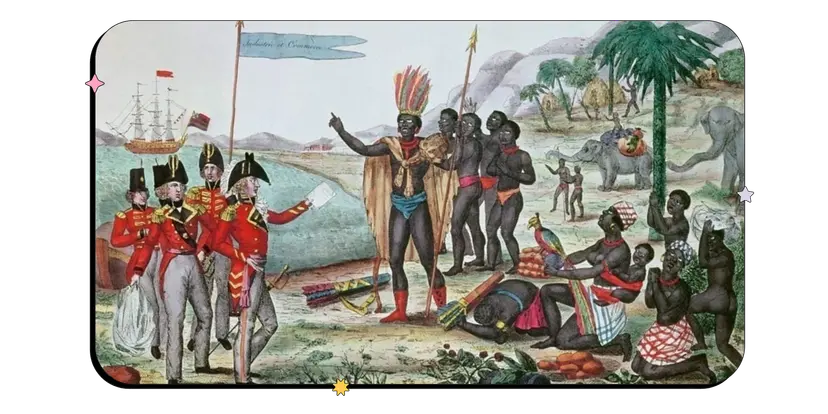
Image Courtesy of change.org
Key Features of Colonial Diffusion
Colonizers imposed their language, religion, political systems, and economic models on indigenous populations.
Native populations were often converted to Christianity, and their traditional religions were suppressed.
Colonization introduced European-style architecture, education systems, legal frameworks, and agricultural practices.
Colonizers rewrote borders, erasing traditional territories and creating new cultural geographies.
Example: Spread of Christianity
Christianity originated in the Middle East but became a global religion through both missionary activity and colonial power. Roman Catholic missionaries spread Christianity throughout Latin America during Spanish and Portuguese colonization. In North America, British and French colonizers promoted Protestant and Catholic conversions, sometimes coercively. Native Americans were often forced to attend Christian schools and abandon indigenous religions. In some areas, land rights were granted only to tribes who adopted Christianity and abandoned traditional customs.
Colonialism also led to creolization, where cultures blended into new hybrid identities. For example, Haitian Creole combines French, African languages, and Caribbean influences, reflecting the fusion caused by colonization and enslavement.
Trade and Commercial Exchange
Trade has long been a central pathway for the diffusion of culture. Through the movement of goods, traders also carry ideas, technologies, religious beliefs, and languages across vast distances.
Major Historical Trade Routes
Silk Road: Spanning Asia, the Middle East, and Europe, this network of routes facilitated the exchange of goods like silk, porcelain, and spices. Alongside these, it spread Buddhism, Islam, and scientific knowledge.
Indian Ocean Trade: Connected East Africa, South Asia, and Southeast Asia. This maritime network enabled the spread of Islam, Swahili culture, Hindu-Buddhist architectural styles, and technological innovations like the astrolabe.
Trans-Saharan Trade: Linked North Africa with Sub-Saharan Africa. Spread Islam, Arabic language, and introduced new crops and cultural practices to West Africa.
Mediterranean trade: Enabled cultural exchange among Greeks, Romans, Phoenicians, and later Islamic empires, fostering a shared base of philosophy, architecture, and urban planning.
Cultural Outcomes
Trade encouraged the use of lingua francas—common languages developed to facilitate communication across language groups. Arabic, Greek, and later English became widespread due to trade.
The blending of languages through trade led to the formation of pidgins (simplified languages) and Creoles (stable, native-speaking languages from a blend of tongues).
New religious ideas traveled with traders, such as how Islam spread from Arabia to Southeast Asia through Muslim merchants.
Trade not only moved goods but also transformed societies by creating cultural intersections at every trading hub.
War and Conquest
War has often resulted in the transfer or imposition of culture from conquerors to the conquered, or vice versa. Conquest alters cultural systems, social hierarchies, and belief structures in both overt and subtle ways.
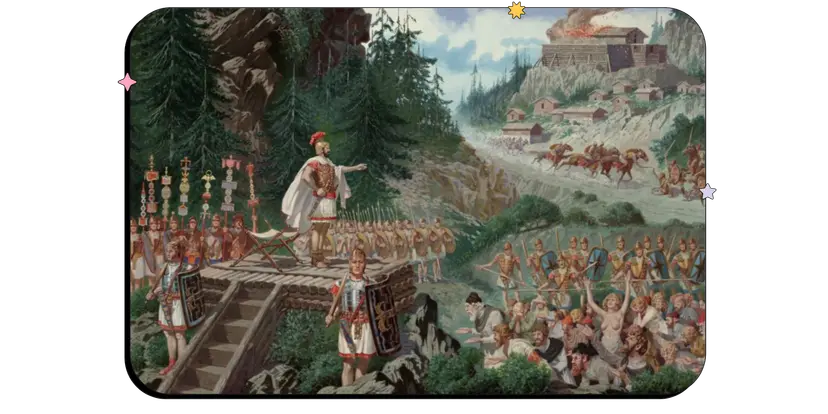
Image Courtesy of the National Geographic Society
Modes of Cultural Diffusion Through Conquest
Imposition: Victorious empires often impose their religion, language, laws, and political structures on defeated populations.
Assimilation: Conquered peoples sometimes adopt the dominant culture to survive or gain social mobility.
Displacement: Refugees fleeing war bring their cultures to new regions, where they influence local traditions.
Cultural fusion: Conquest may lead to mutual cultural borrowing. Rulers often adopt local customs to gain legitimacy.
Examples
The Roman Empire spread Latin, Roman architecture, and legal systems throughout Europe. At the same time, it adopted aspects of Greek religion and philosophy.
The Islamic Caliphates spread Arabic, Islamic jurisprudence, and scientific knowledge across North Africa and into Spain. Moorish architecture and learning flourished in Andalusia.
The Mongol Empire promoted cultural exchange by creating a safe and vast territory across Asia. Although brutal in conquest, the Mongols embraced Persian art, Chinese administration, and Islamic science.
War not only displaces and suppresses cultures—it also creates opportunities for exchange and adaptation, especially when conquerors and the conquered interact over generations.
Technological and Communication Advancements
Technological developments in communication and transportation have historically accelerated the spread of culture, making it possible to share ideas quickly and over greater distances.
Printing Press
Invented by Johannes Gutenberg in the mid-15th century, the printing press was a revolutionary tool for cultural diffusion.
Enabled mass production of texts, making information more accessible and affordable.
Spread Protestant Reformation ideals across Europe, undermining the Catholic Church’s monopoly on religious texts.
Promoted literacy, allowing common people to engage in cultural, scientific, and political discourse.
Standardized languages and facilitated national identity by distributing texts in vernacular languages.
Telegraph and Telephone
These 19th-century inventions revolutionized long-distance communication.
The telegraph allowed messages to be sent over wire networks in minutes, a huge improvement over written letters or verbal transmission.
The telephone made instant voice communication possible, connecting people across towns, countries, and continents.
These tools enabled faster dissemination of cultural content such as news, political ideologies, and scientific knowledge.
Steam Engine and Railroads
Railroads allowed rapid movement of people and goods, facilitating the spread of ideas and cultural practices along transportation corridors.
Cities along major railway lines became centers of cultural convergence, where migrants brought diverse traditions.
Airplane and Global Travel
Air travel made intercontinental migration and tourism feasible for the masses.
Facilitated global conferences, academic exchange, international business, and cultural tourism, which increased exposure to foreign traditions, products, and values.
The expansion of communication and transportation networks created a more interconnected world, where culture could be transmitted not just across space, but in near real-time.
Environmental and Ecological Influences
Environmental and ecological factors have influenced where people live, how they survive, and how their culture spreads.
Environmental Push Factors
Natural disasters, climate change, and resource depletion have historically forced people to relocate, bringing their cultures with them.
Volcanic eruptions, droughts, and floods have displaced communities, leading to migration and the spread of cultural knowledge.
Deforestation, desertification, and soil exhaustion have pushed agricultural societies to seek more fertile land elsewhere.
These migrations contribute to cultural diffusion as displaced populations integrate with or influence host societies.
Resource Availability and Cultural Adaptation
Environmental conditions shape how people develop and spread technologies and cultural practices.
Farming methods like terracing in the Andes or slash-and-burn agriculture in tropical regions were developed in response to local landscapes.
These techniques then spread to areas with similar environments through migration or trade.
As societies moved into new ecological zones, they adjusted their practices while also retaining core cultural traits, resulting in blended traditions.
Example: Polynesian Expansion
Polynesians traveled across vast stretches of the Pacific using stars and ocean currents. As they colonized islands such as Hawaii, New Zealand, and Easter Island, they brought with them traditions like fishing, canoe-making, tattooing, and religious ceremonies. Despite environmental variations across islands, their cultural imprint remains visible, illustrating diffusion guided by environmental navigation and adaptation.
FAQ
Religious pilgrimages facilitated cultural diffusion by moving large numbers of people across regions, creating opportunities for interaction, exchange, and influence. Pilgrims shared beliefs, practices, and languages with others during their journeys, often adopting elements from host communities or introducing their own.
The Hajj brought Muslims from across the Islamic world to Mecca, creating networks of trade and religious unity.
Pilgrimages to Christian shrines in Europe, like Santiago de Compostela, encouraged the exchange of ideas, languages, and goods between regions.
These interactions spread not just religion but also architectural styles, cuisine, and artistic expressions, leaving a lasting cultural impact.
Ancient empires like the Roman, Persian, and Han Empires facilitated cultural diffusion by establishing unified administrative systems, infrastructure, and official languages across diverse regions.
The Roman Empire promoted Latin, Roman law, and urban planning, visible in cities from Britain to North Africa.
Persian roads and messengers helped spread Zoroastrianism and Persian bureaucratic systems.
The Han Dynasty established Confucian values and standardized the Chinese writing system across China.
These empires connected distant regions, enabling the institutional spread of education, religious doctrine, trade practices, and governance, creating cultural cohesion that persisted long after imperial rule ended.
Advancements in maritime technology dramatically expanded the reach and pace of cultural diffusion by enabling longer and safer sea voyages.
The lateen sail, adopted in the Indian Ocean, allowed ships to sail against the wind, increasing mobility and reach.
The compass and astrolabe improved navigation, enabling transoceanic travel by Muslim, Chinese, and European sailors.
These tools enabled the spread of Islam, facilitated the Columbian Exchange, and linked distant markets such as China and East Africa.
By enhancing travel efficiency and reducing risks, maritime technology connected isolated regions and accelerated the exchange of religious ideas, technologies, crops, and cultural practices.
Diaspora communities acted as bridges between their homelands and host regions, promoting cultural diffusion through business, religion, and daily life.
Jewish merchants in medieval Europe established trade connections while preserving their religious and cultural traditions.
Chinese diaspora communities in Southeast Asia created enclaves where Chinese language, religion, and cuisine influenced local culture.
Indian merchants in East Africa brought Hindu and Jain traditions, which influenced local art and architecture.
Diasporas maintained strong transregional ties, serving as hubs of multicultural interaction, while preserving their identity. These communities often became instrumental in spreading language, religious texts, and foodways.
Agricultural diffusion—the spread of farming techniques, crops, and tools—transformed societies by altering food production, settlement patterns, and labor organization.
Domesticated crops like wheat and barley spread from the Fertile Crescent to Europe and Asia, enabling permanent settlements.
Rice cultivation spread from Southeast Asia to China and Japan, influencing irrigation systems and population density.
Sugarcane and maize, introduced across continents during the Columbian Exchange, reshaped economies and diets.
Practice Questions
Explain how trade routes historically contributed to cultural diffusion, using a specific example.
Trade routes served as conduits for cultural diffusion by connecting diverse regions and facilitating the exchange of goods, ideas, and beliefs. The Silk Road, for example, linked East Asia with Europe and the Middle East. Alongside silk and spices, it enabled the spread of Buddhism from India to China and later to Korea and Japan. Merchants, pilgrims, and missionaries shared religious texts, technologies like papermaking, and artistic styles. Cities along the route, such as Samarkand, became cultural melting pots where travelers introduced new languages and customs, demonstrating how commerce acted as a powerful driver of transregional cultural exchange.
Describe one way colonialism led to cultural diffusion and identify a lasting impact on the colonized region.
Colonialism led to cultural diffusion through the imposition of European languages, religions, and institutions on colonized societies. For instance, Spanish colonial rule in Latin America introduced Catholicism, which replaced many indigenous spiritual practices. Missionaries built churches and schools, while colonial governments enforced conversion and religious education. A lasting impact of this diffusion is the widespread presence of Catholicism across countries like Mexico, Peru, and Argentina. Additionally, Spanish became the dominant language, influencing cultural identity, legal systems, and education. This demonstrates how colonialism not only diffused culture but also transformed the social and religious fabric of entire regions.