
The global system of agriculture refers to the interconnected web of production, trade, consumption, and policies that shape how food is grown, processed, transported, and consumed worldwide.
Understanding the Global Agricultural System
The global system of agriculture encompasses the entire process of agricultural production and consumption on an international scale. It is a dynamic, interconnected framework that includes farmers, agribusinesses, corporations, governments, consumers, financial institutions, and non-governmental organizations. Together, these stakeholders shape where food is grown, how it is produced, who has access to it, and how it reaches consumers.
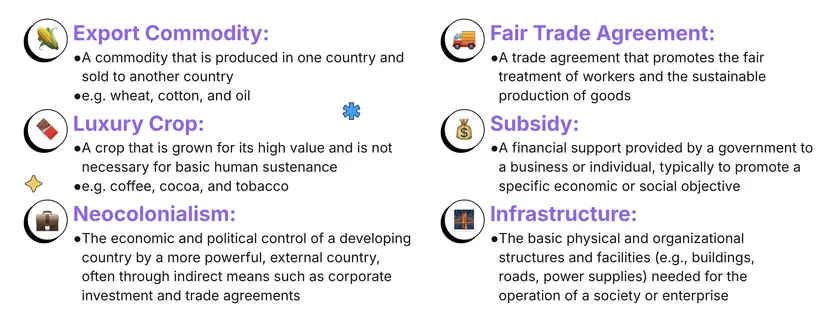
This system functions through:
Production determined by physical geography, labor availability, climate, and access to technology.
Processing and packaging that prepare raw agricultural goods for consumption or resale.
Transportation networks that facilitate the movement of goods across borders.
Consumption patterns influenced by culture, income levels, and food preferences.
Regulatory systems including international agreements, tariffs, subsidies, and sanitary laws.
The global nature of agriculture means that a disruption in one part of the world—such as a drought, flood, or political crisis—can have ripple effects on food availability and pricing in distant regions.
Interdependence in Agricultural Trade
In the modern world, agriculture is characterized by high levels of global interdependence. No country exists in isolation when it comes to food. For example:
The United States exports corn to Japan and Mexico.
Kenya exports flowers and tea to Europe.
Vietnam exports rice to Africa and the Middle East.
This interconnectedness brings several advantages:
Countries can specialize in crops and livestock best suited to their climate and soils.
Consumers enjoy diverse diets with food from multiple regions.
Global markets enable year-round availability of seasonal produce.
However, this interdependence can also lead to vulnerabilities:
If a disease outbreak affects banana crops in Latin America, global banana prices spike.
A conflict in a major wheat-producing country, like Ukraine, can disrupt global supply chains.
Overreliance on exports can make farmers in developing countries dependent on volatile global prices.
Global Supply Chains in Agriculture
What Are Global Supply Chains?
Global supply chains refer to the entire sequence of production and distribution that agricultural goods pass through from farms to the consumer. These chains may stretch across continents and involve multiple stakeholders, including:
Producers (farmers or plantations)
Processors (mills, slaughterhouses, canneries)
Distributors (logistics and transport companies)
Retailers (supermarkets, wholesalers, online platforms)
These complex systems are supported by technological advances, including refrigeration, container shipping, satellite tracking, and data analytics.
Benefits of Global Agricultural Supply Chains
Efficiency and scale: Goods can be produced where costs are lowest, benefiting from economies of scale.
Product diversity: Consumers in any region can access a wide range of foods, even those not locally produced.
Market expansion: Farmers and agribusinesses can sell to international markets, increasing their potential revenue.
Challenges and Drawbacks
Environmental impacts: Long-distance transport contributes to greenhouse gas emissions. Industrial farming often leads to deforestation, water pollution, and soil degradation.
Labor issues: In many countries, agricultural workers face poor working conditions, low wages, and a lack of legal protections.
Food security risks: Dependency on global imports can leave regions vulnerable to price spikes, embargoes, or supply disruptions.
Real-World Examples of Global Agricultural Supply Chains
Bananas: Grown in Ecuador, Costa Rica, and the Philippines, bananas are transported via refrigerated ships to Europe, North America, and East Asia. Most bananas consumed in Western countries never ripen in their country of origin.
Coffee: Beans grown in Colombia are shipped raw to Germany for roasting, packaged in Switzerland, and sold globally under international brands.
Soybeans: The U.S. and Brazil dominate global soybean exports, shipping vast quantities to China for animal feed and food production. Climate or trade policy changes in either exporting or importing countries can impact global prices.
Palm oil: Grown mainly in Indonesia and Malaysia, palm oil is used in processed foods, cosmetics, and biofuels. It is exported worldwide but has been linked to deforestation and habitat loss.
Multinational Agribusiness Corporations
Multinational corporations dominate various stages of the agricultural supply chain. Their influence shapes trade routes, pricing, regulations, and farming practices. Examples include:
Nestlé: Operates across the food processing and packaged goods sectors, sourcing ingredients globally.
Cargill: Specializes in grain trading, meat processing, and agricultural financial services.
ADM (Archer Daniels Midland): Processes oilseeds, corn, and wheat for export and domestic use.
Tyson Foods: One of the largest global meat producers, involved in poultry, beef, and pork.
Unilever: A major player in processed food production using globally sourced agricultural inputs.
These corporations often operate on economies of scale, allowing them to offer lower prices than smallholders, which can disadvantage local producers in developing nations.
Patterns of Global Food Distribution
The North-South Divide
The Global North (wealthier, industrialized nations) typically produces food surpluses, while the Global South (less-developed nations) often faces food shortages. For instance:
The U.S. and Canada are major food exporters.
Sub-Saharan Africa, despite having arable land, imports significant amounts of food.
This pattern perpetuates dependency and economic inequality. Northern countries influence agricultural markets, sometimes pushing developing nations into unfavorable trade terms.
Urban-Rural Divide
Urban areas benefit from better infrastructure, refrigerated storage, and access to international supply chains.
Rural areas, especially in low-income countries, may struggle with access to fresh, nutritious food, even if they are near farms.
This can lead to a paradox where farmers producing food may still suffer from food insecurity due to poor transportation, storage losses, or limited local demand.
Wealth Inequality
Wealthier consumers can afford organic, imported, or luxury foods.
Lower-income populations are often limited to processed, low-nutrient, high-calorie foods.
This inequality contributes to the dual burden of malnutrition and obesity found globally.
Intra-Regional Trade
Regions with integrated trade systems experience efficient agricultural exchange. For example:
European Union (EU) countries trade food products freely, supported by common regulations.
ASEAN (Southeast Asia) countries engage in growing food trade partnerships.
Mercosur (South America) promotes agricultural trade among Brazil, Argentina, Paraguay, and Uruguay.
Seasonal Fluctuations
Because harvest seasons vary across hemispheres, countries import food during their off-season. For instance:
Chile exports fruit to the U.S. during winter months in North America.
Northern European countries import tomatoes and lettuce from Spain and Morocco during colder months.
Factors Influencing Global Food Distribution
Transportation Infrastructure
Robust road, rail, air, and maritime infrastructure is essential for effective food distribution. Poor infrastructure leads to:
Post-harvest losses due to spoilage.
Delays in reaching markets.
Increased prices due to inefficiency.
Developing infrastructure is crucial for improving access to food, especially in isolated rural areas.
Trade Policies and Tariffs
Governments can shape food flows through:
Tariffs: Taxes on imports or exports that protect local farmers but can raise prices.
Quotas: Limits on how much of a product can be traded.
Free trade agreements: Reduce barriers and encourage cross-border agricultural trade.
Examples include:
NAFTA/USMCA facilitating trade in North America.
Common Agricultural Policy (CAP) within the EU, which subsidizes certain crops and regulates trade.
Market Demand
Consumer preferences play a key role in determining what is grown and where it is sold. Demand for:
Organic food drives exports from certified producers.
Tropical fruit leads to expanded cultivation in equatorial regions.
Plant-based alternatives increases global soybean and pea production.
Market demand influences production techniques, land use, and even shifts in dietary patterns.
Political and Economic Instability
Instability can derail food systems. Examples include:
War in Syria disrupting wheat production.
Hyperinflation in Venezuela making imports unaffordable.
Trade sanctions against countries like Iran or Russia impacting food availability.
Political risk is a major consideration for global food investors and suppliers.
Climate and Natural Disasters
Weather-related challenges are increasing due to climate change:
Droughts reduce crop yields.
Floods damage infrastructure.
Storms and hurricanes destroy harvests and supply chains.
These events not only affect local populations but also shift global commodity prices. For example, a drought in Brazil can impact global coffee prices.
Agricultural Practices
Agricultural systems vary widely:
Industrial farming uses high-yield monocultures, fertilizers, and irrigation, mostly for export.
Subsistence farming feeds local populations with minimal external inputs.
Agroecology and permaculture aim for sustainable, local-focused systems.
The type of farming used affects not only yield but also the environmental impact and resilience of food systems.
Food Safety Regulations
Governments regulate agricultural imports and exports through safety standards:
Limits on pesticide residues
Labeling requirements for GMOs
Sanitation protocols for meat and dairy
Failure to meet these standards can lead to rejected shipments, lost revenue, and reputational damage for producers.
Food Waste
A significant proportion of global food is lost or wasted:
Production losses due to pests or spoilage.
Distribution losses from poor transport and storage.
Retail and consumer waste due to overstocking or expiration.
Reducing food waste can:
Improve food security.
Lower environmental impact.
Increase supply without increasing production.
FAQ
Multinational corporations (MNCs) significantly influence global agriculture, often undermining the autonomy of small-scale farmers. These corporations control major stages of the supply chain—from seeds and inputs to processing and distribution. Farmers tied to MNCs may be contractually obligated to use specific seeds, fertilizers, and farming methods, reducing their independence. While contracts can offer stable income, they often come with high input costs and limited flexibility.
MNCs may dictate pricing and production schedules.
Farmers face competition from industrial-scale producers.
Intellectual property rights on genetically modified seeds can prevent seed saving.
Market dominance by MNCs often shifts local priorities from subsistence farming to export-oriented agriculture.
Smallholders may become economically dependent on a single buyer or corporation.
Technology can enhance productivity, but it often reinforces existing inequalities between countries and producers. Developed countries have access to precision agriculture, satellite monitoring, and genetically modified crops, giving them a competitive edge. Meanwhile, many developing nations lack the infrastructure, funding, or education to implement such technologies.
High costs of agricultural machinery and biotech make them inaccessible to smallholders.
Internet and data tools used in agribusiness are limited in rural regions of the Global South.
Technological advancements favor large-scale monocultures over diversified, traditional practices.
Dependency on foreign tech creates a power imbalance and limits local innovation.
The “digital divide” means technological gains benefit already-advantaged producers disproportionately.
Agricultural subsidies in wealthier countries distort global trade by artificially lowering production costs for domestic producers. This makes their exports cheaper, undercutting farmers in developing nations who cannot compete. As a result, local agricultural sectors in poorer countries may collapse or become dependent on food imports.
Subsidized goods flood international markets, lowering global prices.
Developing country farmers lose local markets to cheaper imported products.
It becomes difficult for unsubsidized producers to invest or grow sustainably.
Subsidies often promote surplus production and environmental overuse.
The reliance on cheap imports reduces food sovereignty and increases vulnerability to price volatility.
Beyond reducing yields, climate change affects the entire agricultural system’s reliability, stability, and spatial distribution. It shifts growing zones, alters pest and disease patterns, and increases the unpredictability of seasons. These changes create uncertainty in planning and investment, especially for regions already at risk.
New pests and crop diseases emerge due to warmer temperatures.
Changing rainfall patterns affect irrigation and water access.
Crops may no longer be viable in traditional growing regions, requiring costly adaptation.
Insurance systems struggle to account for new climate risks.
Farmers may migrate or switch to different crops, disrupting local economies and labor markets.
Land grabbing refers to large-scale land acquisitions by foreign investors, corporations, or governments in developing countries, often for agricultural use. These deals are usually aimed at producing export crops or biofuels, not feeding local populations. This practice has serious implications for food security, environmental sustainability, and rural livelihoods.
Local communities may lose access to land they traditionally used.
Land deals often lack transparency and exclude community consent.
Large tracts are converted into industrial agriculture, leading to biodiversity loss.
Water rights and forest access may also be seized, affecting non-agricultural livelihoods.
The focus on export production reduces the availability of land for domestic food crops.
Practice Questions
Explain how global supply chains influence agricultural practices and food availability in both developed and developing countries.
Global supply chains shape agricultural practices by encouraging specialization, mechanization, and export-oriented farming, especially in developing countries. In developed nations, they support year-round access to diverse foods and promote efficiency through advanced technology. However, in developing regions, farmers may prioritize export crops over local food needs, leading to reduced food security. Supply chains also expose both regions to market volatility, where a disruption in one country can affect global prices and availability. Ultimately, while global supply chains improve accessibility and profitability, they can also widen inequalities and create dependencies that disadvantage small-scale or local producers.
Describe two factors that influence the global distribution of food and explain their impact on food access.
One major factor is transportation infrastructure, which determines how efficiently food can be moved. Countries with advanced transport systems distribute food quickly and affordably, improving access. In contrast, poor infrastructure limits access, especially in rural areas. A second factor is trade policy, including tariffs and subsidies. Favorable policies allow for cheap imports and a stable food supply, while restrictive policies raise prices and reduce availability. Together, these factors either facilitate or hinder the movement and accessibility of food, meaning that both economic and physical geography critically shape food distribution in the global agricultural system.