
The global economy has reshaped production, labor, and development patterns, influencing industrial locations, trade flows, and regional economic transformations across the globe.
Weber’s Least Cost Theory
Weber’s Least Cost Theory, developed by German economist Alfred Weber in the early 20th century, is a model used to explain the location of manufacturing industries based on minimizing production costs. According to Weber, businesses seek to reduce three primary costs when choosing a location: transportation, labor, and agglomeration.
Transportation Costs: Transportation is often the most significant cost in manufacturing. Companies will seek a location that minimizes the cost of moving raw materials to the factory and finished goods to the market. For example, industries that rely heavily on bulky or weight-losing raw materials (such as copper mining) will locate near the raw material sources.
Labor Costs: Weber’s theory takes into account wage differences. If savings from cheaper labor outweigh the additional transportation costs, firms may relocate. For instance, call centers are frequently established in countries with lower wage levels such as the Philippines or India.
Agglomeration Economies: This refers to the clustering of industries in one location. Firms benefit from shared services, skilled labor pools, and technological spillovers. For example, Silicon Valley attracts high-tech firms due to its infrastructure, expertise, and innovation networks.
Application Examples:
A car manufacturer might locate near metal suppliers and ports to reduce shipping costs and facilitate export.
A clothing brand could outsource manufacturing to Vietnam where labor is affordable.
A software company may establish its offices near universities and research centers to access a skilled workforce.
Weber’s theory has limitations in the post-industrial era due to global telecommunication, service sector expansion, and the rise of multinational corporations, but it still provides foundational insight into industrial location.
Agglomeration
Agglomeration refers to the concentration of businesses, industries, and services in a particular geographic area. This clustering enables firms to benefit from shared infrastructure, reduced transportation costs, and access to a common labor market.
Benefits of Agglomeration:
Proximity to suppliers and consumers
Shared transport and communication infrastructure
Easier access to specialized labor
Knowledge spillovers through collaboration and competition
Example: Silicon Valley, California
Silicon Valley exemplifies agglomeration. The dense clustering of technology firms, venture capitalists, startups, and universities like Stanford creates a fertile environment for innovation. The presence of skilled labor, rapid idea exchange, and specialized services sustains Silicon Valley’s global tech dominance.
Agglomeration is not limited to technology. It can be found in financial hubs (like London or New York), film production (Hollywood), and automobile industries (Detroit, historically).
Growth Poles
The Growth Pole Theory, introduced by French economist François Perroux, posits that economic development does not occur uniformly across space but is concentrated in certain urban centers or "poles" that drive regional growth.
Characteristics of Growth Poles:
Heavy investment in infrastructure, education, and innovation
Creation of backward and forward linkages with other industries
Development of economic clusters
Example: Songdo International Business District, South Korea
Songdo is a master-planned smart city designed to attract international business and drive regional development. Built on reclaimed land, Songdo features high-speed internet infrastructure, eco-friendly buildings, and modern transport systems. It exemplifies how targeted development can transform a region into a hub of innovation and investment.
Growth poles aim to stimulate underdeveloped or peripheral areas, eventually radiating economic benefits into neighboring regions.
Just-In-Time (JIT) Delivery
Just-In-Time (JIT) delivery is a manufacturing strategy that reduces inventory costs by delivering inputs to the production line exactly when needed. It originated in Japan, primarily from Toyota's production system, and has become standard in global supply chains.
Key Advantages:
Minimizes inventory holding costs
Reduces waste and overproduction
Enhances responsiveness to demand
Improves cash flow for businesses
Example:
A retailer such as Zara might implement JIT by designing a new clothing line, producing it rapidly in small batches, and distributing it to stores based on real-time demand data. This allows for rapid adaptation to consumer trends and avoids the costs associated with unsold stock.
JIT depends heavily on efficient logistics and stable supplier relationships, which can be vulnerable during disruptions such as pandemics, natural disasters, or political instability.
Post-Fordist Production
Post-Fordism represents a shift from the mass production system associated with Henry Ford to a more flexible, decentralized, and customized mode of production.
Characteristics:
Use of information and communication technology (ICT)
Flexible production lines and labor practices
Customization and niche market targeting
Integration of services with manufacturing
Example:
A modern apparel company may operate with a lean, tech-driven production line that allows for quick shifts in style and volume based on consumer feedback. The use of online ordering platforms and real-time inventory systems reflects a post-Fordist emphasis on efficiency and customization.
Post-Fordism emphasizes adaptability and consumer focus, aligning with broader economic changes driven by globalization and technological advancement.
Economies of Scale
Economies of scale refer to the cost advantages businesses gain as their production increases. The average cost per unit falls because fixed costs are spread over more goods and because of operational efficiencies.
Types of Economies of Scale:
Internal: Achieved within the firm, such as bulk purchasing, specialized labor, or advanced machinery.
External: Result from industry-wide advantages, like skilled labor pools or infrastructure.
Example:
A supermarket chain such as Walmart benefits from economies of scale by purchasing goods in bulk from suppliers, automating warehouse operations, and optimizing transportation logistics. These efficiencies allow it to offer lower prices while maintaining profitability.
Economies of scale reinforce the dominance of large firms in global markets, as they can undercut smaller competitors on pricing and efficiency.
Outsourcing and Offshoring
Outsourcing
Outsourcing involves delegating specific tasks or services to external firms. These firms may be located domestically or internationally and are often chosen for their lower costs or specialized expertise.
Offshoring
Offshoring refers to relocating business operations to another country, typically to exploit lower labor costs, tax advantages, or proximity to raw materials.
Impact on Global Economy:
Reduced manufacturing in core countries (e.g., US, UK, Germany)
Job creation and industrial growth in NICs (Newly Industrialized Countries)
Strengthening of global supply chains
Increased interdependence between economies
Examples:
Transnational Corporations (TNCs) such as Apple design their products in the US but manufacture them in China.
Infosys, an Indian firm, handles IT and customer service operations for American companies.
These practices have widened the geographical scope of industrial development and altered traditional economic roles of core and periphery regions.
NICs and New Asian Tigers
Newly Industrialized Countries (NICs) are those transitioning from primarily agrarian economies to industrial-based systems with rapid urbanization and export-led growth.
Key NICs:
BRIC SAM: Brazil, Russia, India, China, South Africa, Mexico
New Asian Tigers: Hong Kong, South Korea, Taiwan, Singapore
Common Traits:
Investment in education and infrastructure
Focus on export-oriented manufacturing
Attraction of foreign direct investment (FDI)
Example: South Korea
From the 1960s onward, South Korea transformed itself into a high-tech industrial economy with major firms like Samsung and Hyundai. Government policies promoted technological innovation, export competitiveness, and education, making South Korea a model NIC.
NICs challenge the traditional core-periphery model by developing competitive advantages and integrating into global value chains.
Special Economic Zones (SEZs)
SEZs are areas within a country with different economic laws than the rest of the nation, designed to encourage investment and economic activity.
Features:
Tax exemptions
Simplified customs procedures
Modern infrastructure
Relaxed labor laws
Goals:
Attract foreign direct investment
Create employment opportunities
Boost export production
Serve as a model for broader economic reforms
Key Examples:
Shenzhen SEZ, China
Established in 1980, Shenzhen was among China’s first SEZs. It transformed from a fishing village into a global manufacturing and innovation hub. Its success demonstrated the benefits of open-market policies and urban planning.
Dubai International Financial Centre (DIFC), UAE
Founded in 2004, DIFC provides a stable, tax-free environment for financial firms. It offers an independent regulatory system and legal framework based on common law, making it a strategic node in international finance.
Export Processing Zones (EPZs), Kenya
Kenya’s EPZs focus on manufacturing goods for export. Firms benefit from duty-free imports, corporate tax holidays, and modern infrastructure. These zones aim to stimulate employment and regional development.
SEZs are often experimental spaces where governments test new policies to stimulate broader economic change.
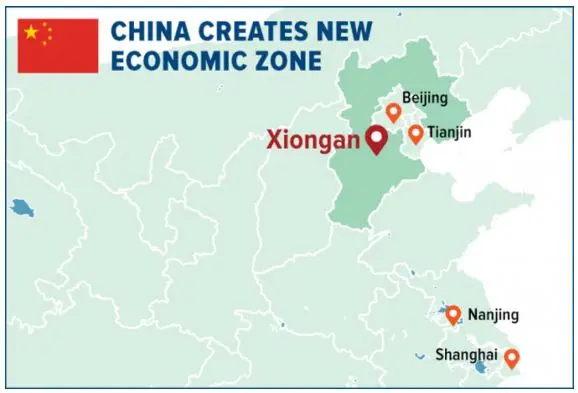
Image Courtesy of Forbes
Transnational Corporations (TNCs)
TNCs are large firms that operate across multiple countries, typically with a central headquarters in a developed country and operations worldwide.
Characteristics:
Control over international production chains
Influence over labor standards, environmental policy, and trade
Ability to shift operations in response to economic conditions
Examples:
Nike designs its products in the US, manufactures in Southeast Asia, and sells globally.
Nestlé operates production facilities and marketing networks in over 180 countries.
TNCs are key players in globalization, contributing to the interconnectedness of economies and shaping consumption patterns, industrial landscapes, and employment across the globe.
FAQ
Special Economic Zones (SEZs) differ from traditional industrial zones primarily in their regulatory framework and economic incentives. SEZs operate under distinct legal and economic rules designed to attract foreign direct investment and boost exports. These zones are typically managed by separate governing bodies that streamline administrative procedures and offer targeted benefits to firms.
SEZs often provide tax holidays, reduced tariffs, and customs exemptions.
Labor laws in SEZs are often more flexible than in the rest of the country, allowing companies to adjust workforce sizes and wages more easily.
Infrastructure in SEZs is usually state-of-the-art, including high-speed internet, modern ports, and logistics centers.
Traditional zones typically do not offer such aggressive incentives or administrative autonomy.
These features make SEZs more appealing to multinational corporations looking for cost efficiency and ease of doing business in emerging markets.
Information and communication technologies (ICTs) are essential to the functioning of post-Fordist production by increasing efficiency, flexibility, and responsiveness in manufacturing and logistics. ICTs allow companies to manage complex, decentralized production systems and track global supply chains in real time.
ICTs enable just-in-time (JIT) systems by synchronizing supply deliveries with production schedules.
Cloud-based platforms support global collaboration between design, engineering, and logistics teams.
Data analytics help companies forecast demand and adjust production volumes accordingly.
ICTs facilitate customer interaction and allow firms to quickly adapt products based on consumer preferences.
By reducing delays and miscommunication across distances, ICTs support the agility required in modern, customized manufacturing environments.
The arrival of transnational corporations (TNCs) in newly industrialized countries (NICs) significantly transforms local labor markets, both positively and negatively. While TNCs create employment opportunities and promote skill development, they can also lead to labor exploitation and increased economic dependency.
TNCs often offer jobs in manufacturing, assembly, and call centers, providing a pathway out of poverty for many workers.
They may introduce advanced training and technology, contributing to workforce development.
However, TNCs sometimes take advantage of lax labor laws, leading to low wages, long hours, and poor working conditions.
Their mobility means they may leave if incentives change, causing sudden job losses.
The overall impact depends on national regulations and the strength of labor protections in the host country.
The global economy has shifted the geography of high-tech industries from being concentrated in developed countries to more distributed networks that include emerging markets and global cities. This redistribution is driven by access to talent, lower costs, and specialized infrastructure.
Countries like India and China have become major tech hubs due to government investment in education and SEZs targeting tech industries.
Global cities such as Singapore and Dubai offer tax incentives, quality infrastructure, and regulatory frameworks that appeal to tech companies.
Proximity to innovation centers like universities and research parks influences the location of high-tech firms.
Digital connectivity allows firms to outsource research, design, and support functions globally.
This spatial reorganization creates new centers of innovation and changes traditional economic hierarchies in the tech sector.
Shifts in consumer behavior, especially the demand for speed, customization, and ethical production, have deeply altered global supply chains. Companies must now respond quickly to changing preferences, which reshapes how, where, and when products are made.
E-commerce growth requires more responsive and shorter supply chains, often favoring regional over global production.
The demand for personalized products has encouraged firms to adopt flexible manufacturing and modular design.
Consumer awareness of sustainability and labor conditions pressures firms to ensure transparency and ethical practices in their supply chains.
Technologies like blockchain and AI are being used to monitor and adapt supply chains in real-time.
These factors make supply chains more dynamic but also more complex, requiring constant coordination across international networks.
Practice Questions
Explain how Special Economic Zones (SEZs) illustrate the impact of globalization on the spatial organization of economic activity. Provide an example.
Special Economic Zones (SEZs) demonstrate how globalization reshapes economic geography by concentrating industry and investment in designated regions with favorable conditions. These zones offer tax incentives, relaxed regulations, and improved infrastructure to attract transnational corporations. SEZs promote industrial growth in developing countries, integrating them into global production networks. For example, Shenzhen, China transformed from a small town into a global tech hub after being designated as an SEZ in 1980. This shift illustrates how global capital flows and production strategies are increasingly influencing where economic activity is concentrated, especially in formerly peripheral regions of the world economy.
Describe how the shift to post-Fordist production has affected the nature of industrial employment and explain one advantage of this shift for global firms.
The transition to post-Fordist production has led to more flexible, decentralized, and technology-driven manufacturing. Unlike Fordist mass production, post-Fordist methods emphasize adaptability, just-in-time delivery, and specialization. This has reduced the need for large, centralized workforces and increased demand for skilled labor in logistics and design. For global firms, one major advantage is the ability to respond quickly to changes in consumer demand by customizing products and shortening production cycles. For example, firms can switch suppliers or production sites efficiently, gaining a competitive edge in fast-changing global markets while reducing inventory and production costs.